
China Factory Audit Checklist: What an Audit Checks, How Long It Takes and What It Costs
What a China factory audit checks before you order: existence, ownership, capacity, machinery, quality system, materials and export record, with costs.
1. Why Audit Before You Order
Most losses in China sourcing happen before production starts: a deposit wired to a trading company that presented itself as the factory, a factory that cannot make the quantity in the time promised, or a product that cannot meet the Indian standard it will be tested against. A factory audit is the check that catches these while the money is still in India. It is not the same as a pre-shipment inspection, which checks the finished goods; the audit checks the maker. The China factory visit guide covers the visit itself; this article is the checklist an auditor works through.
2. The Four Kinds of Audit
| Audit | What it answers | Where it is done | When to use it |
|---|---|---|---|
| Background check | Does the company exist, who owns it, is it a factory or a trader, any penalties or court cases | Desk, from official registers | Every new supplier, before any payment |
| Factory capability audit | Can this factory make my product at my quantity and quality | On site, one day | Before the first order or a large one |
| Social compliance audit | Working hours, wages, safety, child labour, environmental practice | On site, one to two days, to a scheme such as BSCI or SMETA | When your customers or brand require it |
| Product or process audit | Does the production process control the characteristics that matter for this product | On site, with the product in production | Technical products, regulated goods, repeat orders with defects |
3. The On-Site Checklist
- Identity: the name on the gate, the business licence on the wall and the invoice match; the address matches the licence; the person who negotiated with you is on the staff.
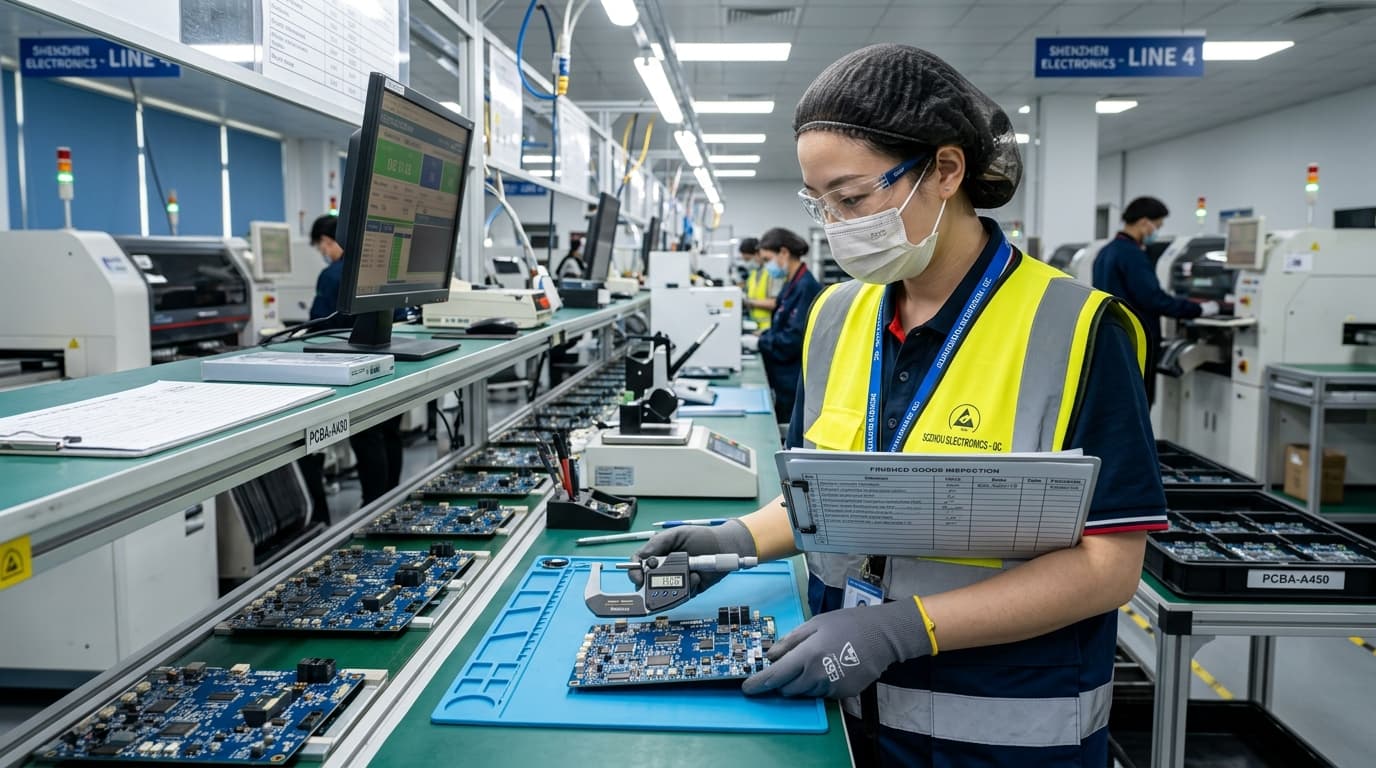
- Production: the machines present can make your product; their number and age; the production lines in operation; other customers' products on the lines (what else they make tells you what they are good at).
- Capacity: monthly output by product type, shifts worked, current order book, and how your quantity fits in the time promised.
- Materials: where raw materials come from, how they are received and checked, how they are stored; for your product, whether the specified material is in the stores.
- Quality system: incoming, in-process and final inspection points; written procedures and records; test equipment and its calibration records; how defects are recorded and what the defect rate is.
- Engineering and tooling: who makes the moulds, where they are kept, who owns them, how samples are approved.
- Workforce: headcount, skilled operators, attendance records, basic safety (exits, guards, protective equipment), accommodation where provided.
- Packing and dispatch: packing area, carton standards, export marking, loading bay, records of past export shipments.
- Management: who makes decisions, who speaks English or has an export team, how complaints are handled, references from export customers.
4. The Paperwork Checked Against the Register
Documents are checked, not collected. The business licence number is verified on China's National Enterprise Credit Information Publicity System, which shows the registered name, legal representative, registered capital, business scope and any administrative penalties. The business scope must include manufacturing of your kind of product; a scope limited to "trading" or "sales" means a trading company, whatever the showroom suggests. Export records are checked for consistency with the claimed customers. Quality certificates such as ISO 9001 are checked against the certification body's register and for the site and scope they cover; a certificate attests to a management system, not to the quality of any product. Product certifications matter for India: electronics and toys under BIS compulsory registration, for example, need a valid licence for that model and that factory, and an audit confirms whether the factory holds one or has made such products for Indian customers.
5. Red Flags on the Day
- The meeting is moved from the factory to an office or a restaurant; the factory shown is "a partner's".
- The licence name differs from the company you were quoted by, with an explanation.
- No current production of anything like your product; machines idle or covered.
- No test equipment, or equipment without calibration records.
- Moulds for your product are elsewhere and cannot be shown.
- The bank account for your deposit is a personal account or a company with another name. The supplier scam red flags article lists the payment traps in detail.
6. What an Audit Costs and How Long It Takes
A background check is a day's desk work. A capability audit takes one auditor one day on site plus travel, and the report follows within a few days; social compliance audits to a scheme take one to two auditor-days and are priced by the scheme's rules. Fees are set per auditor-day plus travel, and vary with the region and the auditor's qualifications; our factory audit service page states the current fee for Guangdong, Zhejiang and Jiangsu. Set against a production deposit of 30% of the order, an audit is a small fraction of the money it protects.
7. Reading the Report and Deciding
A useful report is specific: photographs of the licence, the lines, the stores and the test room; the output and capacity figures as stated by the factory and as observed; a list of findings graded by seriousness; and a recommendation with conditions. "Approved subject to a pre-shipment inspection and payment against the inspection report" is a common and sensible outcome. "Trading company presenting as a factory" is not a failure if the price and the service are right, but the order should be structured for a trader, with the actual factory named. The supplier verification guide explains how the background check and the audit fit together, and the China sourcing guide where the audit sits in the order process.
Frequently Asked Questions
What is the difference between a factory audit and a pre-shipment inspection?
An audit checks the factory before you order: existence, ownership, capacity, machinery and quality system. A pre-shipment inspection checks the finished goods against your specification before the balance is paid. Most orders need both.
How long does a factory audit take?
A background check is a day at the desk. A capability audit is one auditor-day on site plus travel, with the report within a few days. Social compliance audits take one to two days.
Is an ISO 9001 certificate enough?
No. It shows a management system was certified for a site and scope on a date; verify it with the certification body and still look at the production and the test equipment. It says nothing about your product's quality.
What if the supplier turns out to be a trading company?
That is information, not necessarily a reason to stop. Ask for the factory's name, structure the order with the trader's responsibilities written down, and consider auditing the factory as well.
Sources
- National Enterprise Credit Information Publicity System (China) · official register of Chinese companies: licence, scope, capital, penalties
- ISO 9001: quality management systems · what a quality certificate attests and does not
- Bureau of Indian Standards · products under compulsory certification in India
- China Factory Audit
- On-site Factory Inspection
- Quality Assurance China
- Supplier Audit Checklist
Get Expert Guidance on China Travel & Sourcing
Share your details below. We'll save your inquiry and immediately connect you with our China specialist on WhatsApp.
Prefer to call us directly?Call +91-8586939476
More Essential Guides for Importers
Have a Product in Mind?
Send the product, quantity and target price. We come back with suppliers and what it takes to order.